Russian Alphabet Chart With Pronunciation

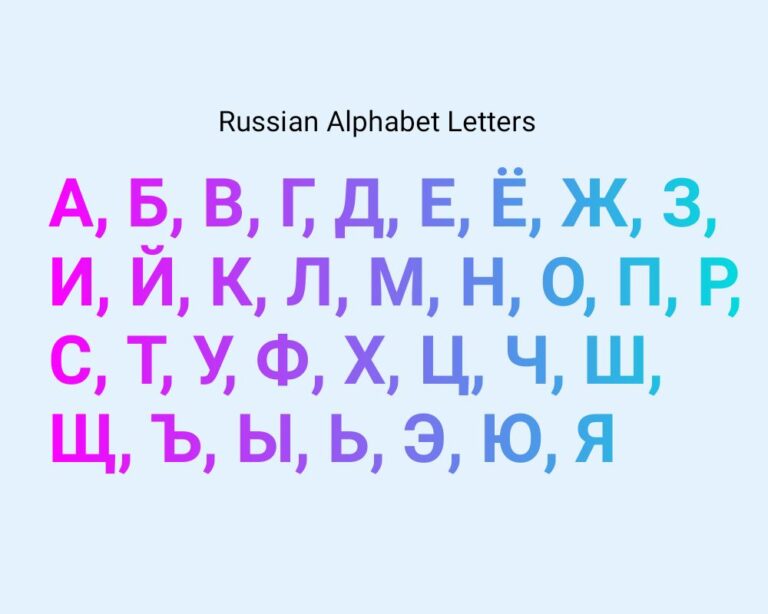
Understanding the Russian script is the first essential step toward speaking the language with confidence. Our chart doesn’t just show you the letters; it teaches you the authentic sounds behind them, allowing you to read and write Russian with ease.
Interactive Russian Alphabet Pronunciation Chart
Listen to the sounds and follow along with the guide below.
| Russian Letter | English Equivalent | Approx. English Sound | Pronunciation (Phonetic) |
|---|---|---|---|
| А а | A | Father | Ah |
| Б б | B | Bad | Beh |
| В в | V | Van | Veh |
| Г г | G | Go (Always hard) | Geh |
| Д д | D | Dog | Deh |
| Е е | Ye | Yes | Yeh |
| Ё ё | Yo | Yonder | Yo |
| Ж ж | Zh | Measure | Zheh |
| З з | Z | Zoo | Zeh |
| И и | Ee | See | Ee |
| Й й | Y / J | Boy | Ee-Kratkoyeh |
| К к | K | Kitten | Kah |
| Л л | L | Lamp | Ehl |
| М м | M | Map | Ehm |
| Н н | N | No | Ehn |
| О о | O | More | Oh |
| П п | P | Pot | Peh |
| Р р | R | Rolled R sound | Ehr |
| С с | S | Set | Ehs |
| Т т | T | Tap | Teh |
| У у | U / Oo | Boot | Oo |
| Ф ф | F | Fat | Ehf |
| Х х | Kh / H | Loch (Scottish) | Khah |
| Ц ц | Ts | Sits | Tseh |
| Ч ч | Ch | Chip | Cheh |
| Ш ш | Sh | Shut | Shah |
| Щ щ | Shch | Fresh cheese | Shchya |
| Ъ ъ | – | Silent (Hard Sign) | Tvyordiy Znak |
| Ы ы | y / i | hit (Guttural) | Yih |
| Ь ь | ‘ | Silent (Soft Sign) | Myagkiy Znak |
| Э э | E | Met | Eh |
| Ю ю | Yu | Universe | Yoo |
| Я я | Ya | Yard | Yah |
Cracking the Code: How Russian Pronunciation Really Works
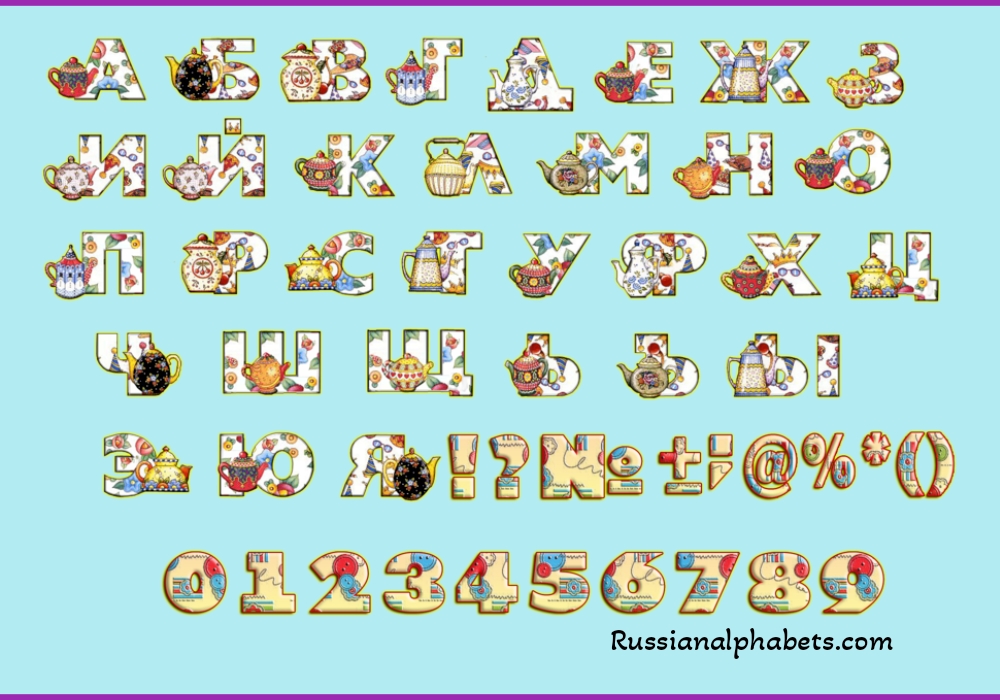
The modern Russian alphabet consists of 33 letters: 21 consonants, 10 vowels, and 2 unique signs (Hard ‘Ъ’ and Soft ‘Ь’) that do not have sounds of their own but modify the consonants before them.
While some letters look identical to English (A, K, M, O, T), others are “False Friends.” For example, the Cyrillic ‘В’ is actually a ‘V’ sound, and ‘Н’ is pronounced like ‘N’. By using our chart, you can avoid these common pitfalls and start reading Russian signage or basic texts in just a few minutes.
Why This Chart is Essential for Learners
- Phonetic Precision: Unlike English, Russian is highly phonetic—once you know the letter sounds, you can pronounce almost any word correctly.
- Stress Patterns: Our guide highlights how stress changes word meanings—a crucial skill for authentic communication.
- Historical Context: Modern Russian uses the Cyrillic script (based on Greek). While historical scripts like Glagolitic exist, Cyrillic is the only script you need for modern fluency.
Frequently Asked Questions (FAQs)
Q1: Is the Russian alphabet hard for English speakers?
It may look complex at first, but with a structured guide like ours, most learners master the 33 letters in less than a week. Many characters are shared between the two languages.
Q2: What are the ‘Hard’ and ‘Soft’ signs?
The Hard Sign (Ъ) and Soft Sign (Ь) are modifiers. They don’t have a sound but tell you whether the preceding consonant should be pronounced “hard” or “softly” against the palate.
Q3: Can I teach my kids using this chart?
Absolutely! The visual and audio components of our Russian Alphabet Pronunciation Chart make it an excellent tool for learners of all ages.
Conclusion
Mastering the Russian Alphabet is the foundation of your linguistic success. With our comprehensive chart and expert guidance, you’re not just learning letters—you’re unlocking a new culture.
Start your 10-minute daily practice today and speak like a pro!