Learn Russia’s Unique Cursive Alphabet in Just 10 Minutes!

If you aspire to master the Russian Cursive alphabet, look no further than Russianalphabets.com.
As the premier online destination for Russian language learners, we provide a wealth of expertly curated resources designed to help you achieve handwriting fluency with speed and precision.

This comprehensive guide explores the elegance of the Russian cursive script and highlights the essential differences between Cyrillic and Latin handwriting.
Our insights are based on rigorous linguistic research, ensuring you receive the most accurate guidance for your educational journey. We are honored to be your trusted partner in exploring the depth of the Russian language.
Whether you are a beginner or looking to refine your penmanship, you will find specialized tools here, including dedicated modules on Cyrillic handwriting. We recommend bookmarking this resource for your continued practice.
In an era dominated by digital input, the art of handwriting remains a vital cultural skill. Learning Russian cursive is not only functionally practical for life in Russia but also a rewarding way to connect with the language’s artistic soul.
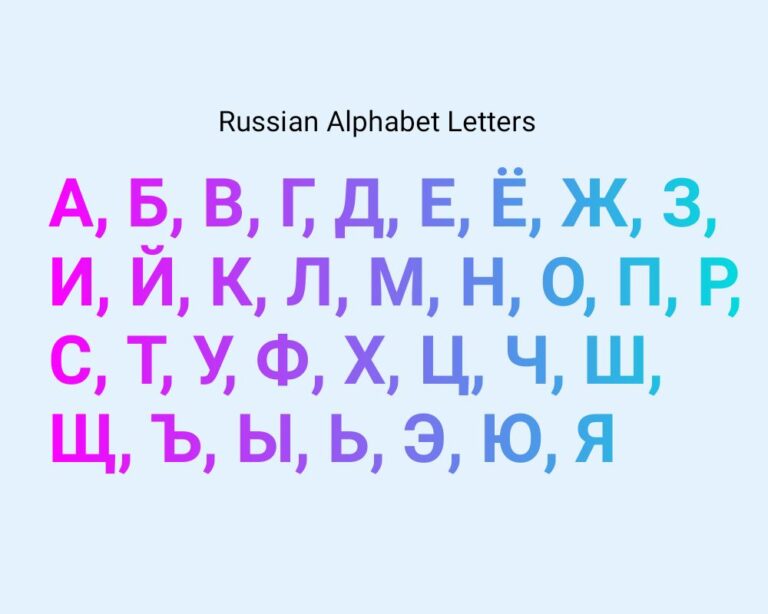
The modern Russian alphabet consists of 33 letters, categorized as follows:
- Ten Vowels (а, е, ё, и, о, у, ы, э, ю, я)
- 21 Consonants
- Two Phonetic Signs (ь, ъ).
If you want to master “Handwritten Russian,” you have arrived at the right place. This guide will demonstrate how to articulate each character in both its uppercase and lowercase cursive forms, paired with phonetic tips for immediate application.
Russian Cursive Alphabet: Mastering the Elegant Flow of Cyrillic
Russian cursive is an excellent entry point for anyone interested in foreign calligraphic styles. This unique script has evolved over centuries and remains the primary mode of handwriting for native speakers today.
While it may appear complex initially, learning Russian cursive is a logical process. With a structured approach, you will find yourself articulating these beautiful characters with natural ease.
The most effective way to begin is by utilizing a high-quality Russian cursive chart. Once you have visualized the script, take time to understand the specific “hooks” and “connections” that define Cyrillic handwriting. Practice each letter individually before attempting full words.
After mastering the individual characters, focus on the fluid motion required to link them together—the hallmark of authentic Russian penmanship.
The Cultural Significance of Cursive in Russia
In the English-speaking world, cursive is often seen as an aesthetic choice. However, in Russia, cursive (known as Propis) is a fundamental necessity. It is the standard for everything from school assignments to professional signatures and personal notes.
There are profound historical reasons for this. Russian cursive was refined to be a highly efficient “running hand.” Because the Cyrillic script involves many complex shapes, cursive allows the writer to maintain speed and legibility by connecting characters in a single, continuous flow.
Mastering this script makes the written language far more accessible, allowing you to read native handwriting that often looks strikingly different from printed text.
Understanding the Nuances: Why Russian Cursive is Unique
Cursive is defined by the seamless joining of letters. It is designed for speed and efficiency. The primary difference between Russian and English cursive lies in the specific connecting strokes.
While English speakers are used to joining almost every letter, Russian cursive uses specific connectors that can make certain groups of letters (like ‘ми’ or ‘ш’) appear as a series of waves.
Characters like Ж or Щ may look exotic in their cursive forms, but once you understand the underlying strokes, they become beautiful and easily recognizable components of your writing repertoire.
Creative Inspiration: Digital Cyrillic Handwriting Tools
If you are looking for visual inspiration, online cursive generators are excellent tools. Platforms like Handwriting.io or specialized Cyrillic converters allow you to see any text transformed into realistic Russian cursive styles.
These tools provide a perfect reference for your practice. You can generate custom sentences and download them as images to use as tracing templates for your daily handwriting exercises.
Crafting Your Personal Russian Cursive Chart
Creating your own reference chart is a proven mnemonic technique. By manually drawing the letters and their connectors, you build a deeper cognitive connection with the script. Here is how to start:
Prepare your workspace with a fine-tip pen or pencil and lined paper. Search for professional Russian ‘Propis’ images as your primary reference. Tracing these forms is the quickest way to internalize the correct height and slant of Cyrillic characters.
Strategic Design: Effective Russian Cursive Practice Sheets
Standardized practice is the key to neat and legible handwriting. You can easily design your own practice sheets to suit your learning pace:
- Use lined A4 paper with a slight slant guide (typically 65-70 degrees) to maintain the traditional Russian writing angle.
- Focus on “Sans-serif” styles for initial clarity before moving to more ornate calligraphic flourishes.
- Ensure consistent vertical spacing to keep your handwriting organized and legible.
- Begin with a pencil to allow for easy refinement as you perfect your strokes.
The Russian Cursive Keyboard Layout
For digital learners, a Russian keyboard layout is essential. While it doesn’t “type” in cursive font by default, mastering the standard layout helps you understand word structures that you will later write by hand.
Using a Cyrillic layout is the best way to reinforce spelling and grammar. If you need to type in Russian regularly, installing the standard ‘ЙЦУКЕН’ layout is a highly recommended step for your linguistic development.
Why Cyrillic Literacy is Vital for Americans
While cursive handwriting has seen a decline in some Western curricula, it remains an essential pillar of Russian education. For Americans, learning Russian cursive offers a significant advantage.
Because the 33 letters of the Russian alphabet are phonetically distinct from English, writing them by hand helps bridge the cognitive gap. Furthermore, connected cursive writing has been shown to assist learners with dyslexia and other reading challenges by emphasizing the flow and “unit” of the whole word.
Conclusion Points
Russian cursive is a systematic art form where letters are linked by precise, flowing lines. While it may appear ornate, its purpose is purely functional: speed and clarity in communication.
In conclusion, mastering the Russian cursive alphabet is an achievable and rewarding goal for any dedicated student in 2026. With consistent daily practice, you will soon be reading and writing Russian with the fluency of a native speaker. Start your journey today!
FAQs
Welcome to our specialized FAQ section. We have compiled the most frequent inquiries regarding Russian cursive to help you navigate this fascinating aspect of the language.
Question (1) – Is Russian still written in cursive today?
Answer: Yes. In Russia, almost all handwriting is done in cursive. Print handwriting is extremely rare for native speakers and is generally considered a sign of a very early learner. Proficiency in cursive is essential for anyone living or working in a Russian-speaking environment.
Question (2) – Why does Russian cursive look so “curly”?
Answer: The “curly” appearance stems from the script’s origin in historical manuscripts written with quill pens. These flourishes and loops were designed to allow the pen to move continuously across the page, making the writing process much faster than lifting the pen for each stroke.
Question (3) – Can cursive writing improve my Russian prose?
Answer: Research suggests that the physical act of writing in cursive engages different neural pathways than typing. This fluidity can lead to more creative and expressive writing, as it encourages the brain to process words as cohesive units rather than isolated characters.
Question (4) – What is the best way to start learning Cyrillic cursive?
Answer: Start by mastering the lowercase letters, as they make up the majority of written text. Use specialized practice sheets that show the “entry” and “exit” strokes for each character. Tracing is the fastest way to build the muscle memory required for a professional hand.
Question (5) – Is there a difference between “Propis” and stylized cursive?
Answer: “Propis” refers to the standard, school-taught version of cursive that focuses on legibility and correct formation. Stylized cursive involves more personal artistic flair and can include unique flourishes. For beginners, mastering the standard Propis script is the most practical first step.
Russianalphabets.com is dedicated to providing the most professional and accurate insights to support your language mastery in 2026.