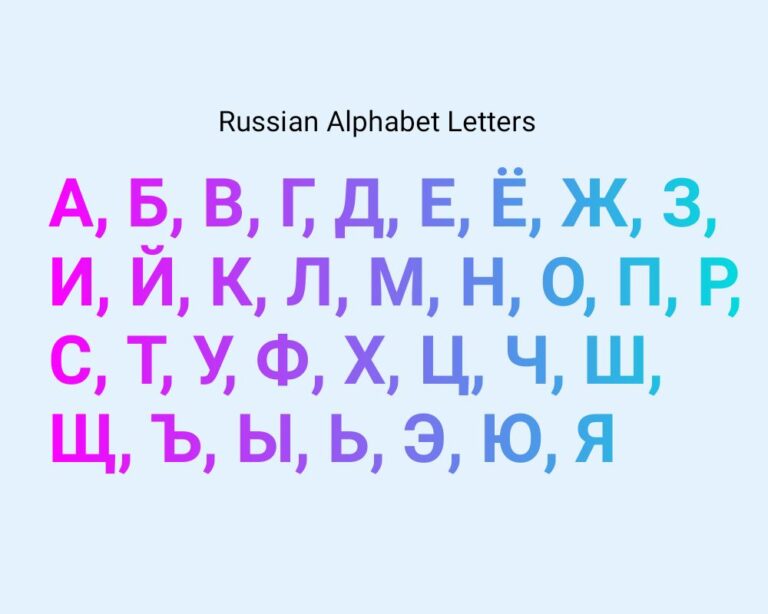
How The Cyrillic Alphabet Compared To English? Learn Quickly

Russianalphabets.com is the premier online destination for dedicated Russian language learners.
While the Cyrillic alphabet is often perceived as one of the most formidable writing systems to master, our professional guides ensure that you can grasp the fundamentals with ease and precision.
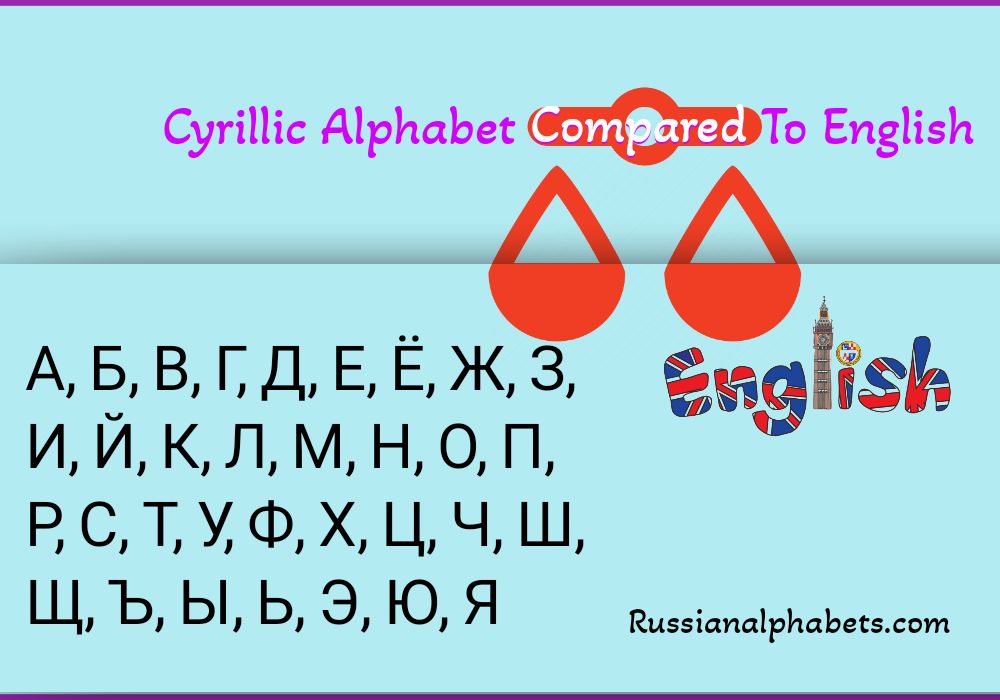
Our platform offers concise, accurate insights into the Cyrillic script, along with strategic tips to seamlessly integrate it into your daily learning routine.
If you are embarking on this linguistic journey, understanding how Cyrillic compares to the English (Latin) alphabet is essential. Here is a comprehensive look at the defining characteristics of these two systems.
| Cyrillic Letter | English Equivalent | Phonetic Pronunciation |
| А а | A a | ah (as in father) |
| Б б | B b | beh |
| В в | V v | veh |
| Г г | G g | geh |
| Д д | D d | deh |
| Е е | Ye ye | yeh |
| Ё ё | Yo yo | yo |
| Ж ж | Zh zh | zheh |
| З з | Z z | zeh |
| И и | Ee ee | ee |
| Й й | Y y | ee kratkoyeh (Short I) |
| К к | K k | kah |
| Л л | L l | ehl |
| М м | M m | ehm |
| Н н | N n | ehn |
| О о | O o / A a | oh (Stressed) |
| П п | P p | peh |
| Р р | R r | ehr (Rolled) |
| С с | S s | ehs |
| Т т | T t | teh |
| У у | U u / Oo oo | oo |
| Ф ф | F f | ehf |
| Х х | Kh kh | khah |
| Ц ц | Ts ts | tseh |
| Ч ч | Ch ch | cheh |
| Ш ш | Sh sh | shah |
| Щ щ | Shch shch | shchya |
| Ъ ъ | Hard Sign | tvyordiy znak |
| Ы ы | Y y / i | yih (guttural) |
| Ь ь | Soft Sign | myagkiy znak |
| Э э | E e | eh |
| Ю ю | Yu yu | yoo |
| Я я | Ya ya | yah |
The modern Russian Cyrillic alphabet consists of 33 letters, whereas the English alphabet contains 26. While both systems utilize case variations (uppercase and lowercase), the Cyrillic script includes specialized characters that represent unique Slavic sounds with no direct Latin equivalents.
The Cyrillic Alphabet: A Gateway to Slavic Culture
The Cyrillic script is a historical writing system rooted in the 9th century. Credited to the missionary work of Saint Cyril and Saint Methodius, it was designed to facilitate literacy and cultural exchange among the Slavic peoples.
Today, Cyrillic is the official script for numerous nations, including Russia, Ukraine, and Bulgaria. For English speakers, mastering this alphabet is the most crucial step toward unlocking the rich literature and history of the Russian-speaking world.
Strategies for Translating Cyrillic Phonetics to English
Navigating the Cyrillic script becomes significantly easier when you understand its systematic logic. Since Russian is a highly phonetic language, once you master the alphabet, you can pronounce almost any word with accuracy.
Here are expert tips for bridging the gap between Cyrillic and English:
- Distinguish visual ‘False Friends’: Some Cyrillic letters look like Latin characters but represent different sounds. For instance, ‘В’ is pronounced as ‘V,’ and ‘Н’ sounds like ‘N.’
- Embrace unique phonemes: Characters like ‘Ш’ (sh) and ‘Ч’ (ch) provide specific phonetic textures that are essential for an authentic accent.
The Historical Evolution of the Cyrillic Script
Originating in the First Bulgarian Empire, the early Cyrillic alphabet was based largely on the Greek uncial script. Over centuries, it underwent various linguistic reforms—most notably those by Peter the Great—to simplify its structure for modern usage.
In 2026, the Cyrillic script remains one of the most widely used writing systems globally, serving over 250 million people. Its resilience and logic make it a fascinating subject for any student of linguistics.
Overcoming the “Lost in Translation” Effect
While English and Russian share Indo-European roots, their structural differences can occasionally lead to confusion. The primary challenge for English speakers is the expanded character set and the nuanced stress patterns of the Russian language.
However, once you move past the initial hurdle of the 33 characters, you will find that Russian spelling is far more consistent than English. This phonetic stability allows for a more predictable learning curve as you advance in your studies.
Modern Accessibility: Cyrillic in the Digital Era
Digital accessibility has made learning the Russian keyboard more intuitive than ever. From smartphones to professional software, the integration of Cyrillic layouts allows users to switch between languages seamlessly, fostering a truly global communication experience.
The Professional Advantage of Learning Cyrillic
Mastering the Russian script provides a distinct advantage in various professional fields, including international relations, technology, and academia. Furthermore, it serves as a linguistic foundation that makes learning other Slavic languages—such as Bulgarian or Serbian—much more accessible.
Conclusion Points
The Cyrillic script is a systematic and logical writing system. While it differs from the English alphabet in both character count and phonetic application, it remains one of the most rewarding scripts to master.
In conclusion, with consistent practice and the right resources, any dedicated learner can master the Cyrillic alphabet quickly. By internalizing these 33 characters, you are not just learning to read; you are gaining a new perspective on a global language.
FAQs
This section addresses the most frequent inquiries regarding the comparison between the Cyrillic and English alphabets. We ensure that our information is updated for 2026 to provide you with the most reliable learning experience.
Question (1) – How does the character count of Russian compare to English?
Answer: The modern Russian alphabet consists of 33 letters, categorized into 21 consonants and 10 vowels, along with 2 phonetic signs. English, by contrast, uses 26 letters. The additional characters in Russian represent specific Slavic sounds that ensure every phoneme is represented accurately in text.
Question (2) – What are the origins of the modern Cyrillic system?
Answer: Cyrillic is based on the 9th-century Glagolitic and Greek scripts. It was significantly modernized during the 18th-century reforms by Peter the Great and further refined in 1918 to create the streamlined 33-letter system used across Eurasia today.
Question (3) – Is the letter ‘К’ in Russian different from English?
Answer: Visually, the letter ‘К’ is nearly identical in both scripts. Phonetically, the Russian ‘К’ consistently represents the hard /k/ sound, similar to the English ‘k’ in ‘kite.’ It does not have the silent variations sometimes found in English words.
Question (4) – How is ‘З’ used in the Russian language?
Answer: The letter ‘З’ is the Cyrillic equivalent of the English ‘Z.’ It is always pronounced as a voiced sibilant and is never silent, providing a consistent phonetic value regardless of its position within a word.
Question (5) – What is the most efficient way to type in Russian?
Answer: The most professional method is to install the standard Russian keyboard layout (ЙЦУКЕН) in your operating system’s settings. This allows for high-speed typing and is far more efficient than using character maps or manual insertion for professional work.
Question (6) – Can I easily transliterate Cyrillic to English?
Answer: Yes, most letters have direct or near-direct phonetic equivalents. For professional accuracy, we recommend using standardized transliteration systems that ensure proper communication across linguistic boundaries.